Cooling systems for the textile industry
In synthetic yarn production, cooling air and process water temperature determine yarn quality; in dye houses, process water and waste heat management directly affect energy costs.
Applications
Machines and processes in this industry for which we have installed cooling systems.
- Synthetic yarn machines
- Dyeing plants
What does cooling solve?
The needs we encounter most often in plants in this industry.
- Stable cooling in yarn drawing
- Dye house process water cooling
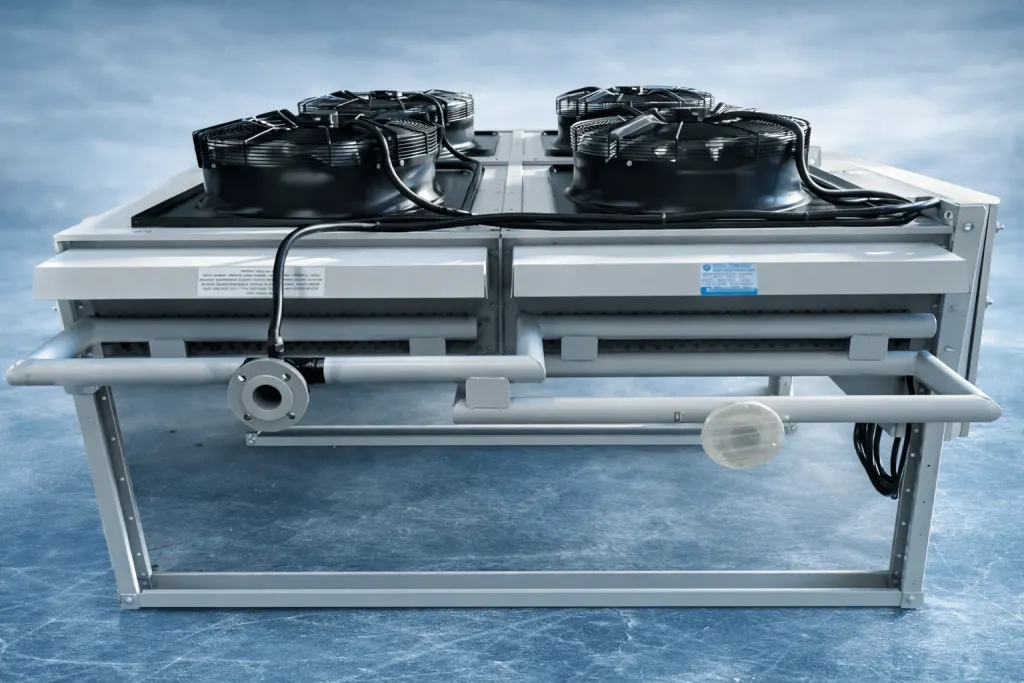
- Low-energy heat rejection with dry coolers
Cooling points in textiles
The cooling step of dyeing machines, finishing and stenter machines, extrusion and quench air in synthetic yarn production, and air conditioning of knitting and weaving halls are the main cooling points of textile plants.
Controlled cooling in dyeing
The cooling rate after dyeing affects fabric hand and colour repeatability. An exchanger fed by a chiller shortens cooling time and reduces mains water consumption.
Technical guides for this sector
Frequently asked questions
Does using a chiller instead of mains water save money in a dye house?
Circulating cooling water in a closed circuit instead of using it once and discarding it clearly reduces water consumption; the saving depends on water price and usage.
Why is cooling important in yarn production?
The temperature of the air and water that cool the filament determines yarn strength and evenness; a constant temperature reduces quality variation.
Recommended products
Final selection is made after the heat load calculation.