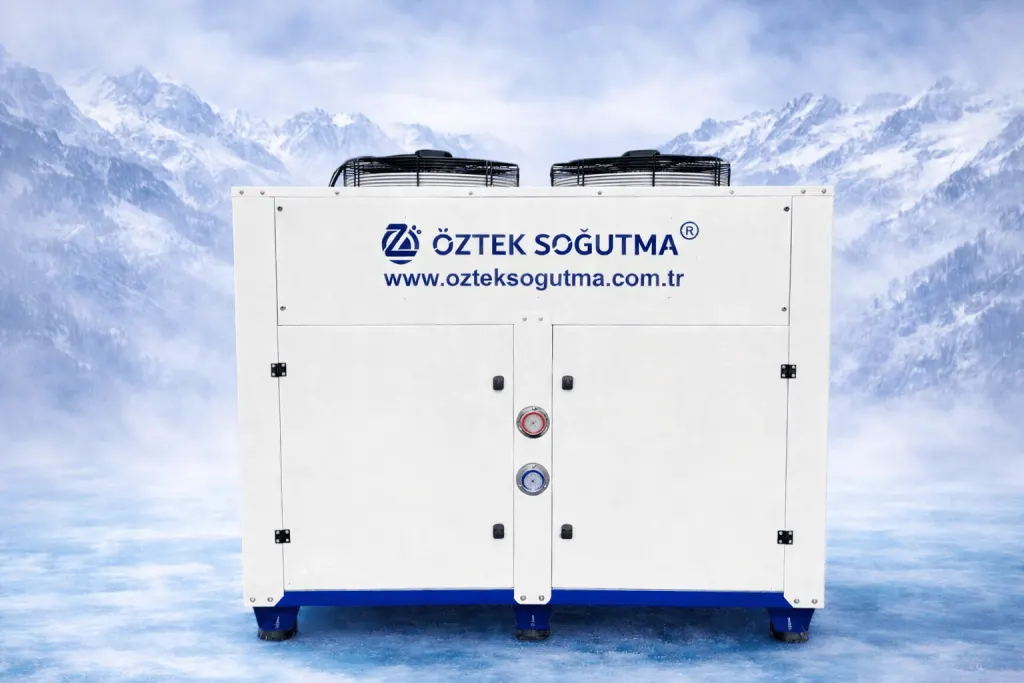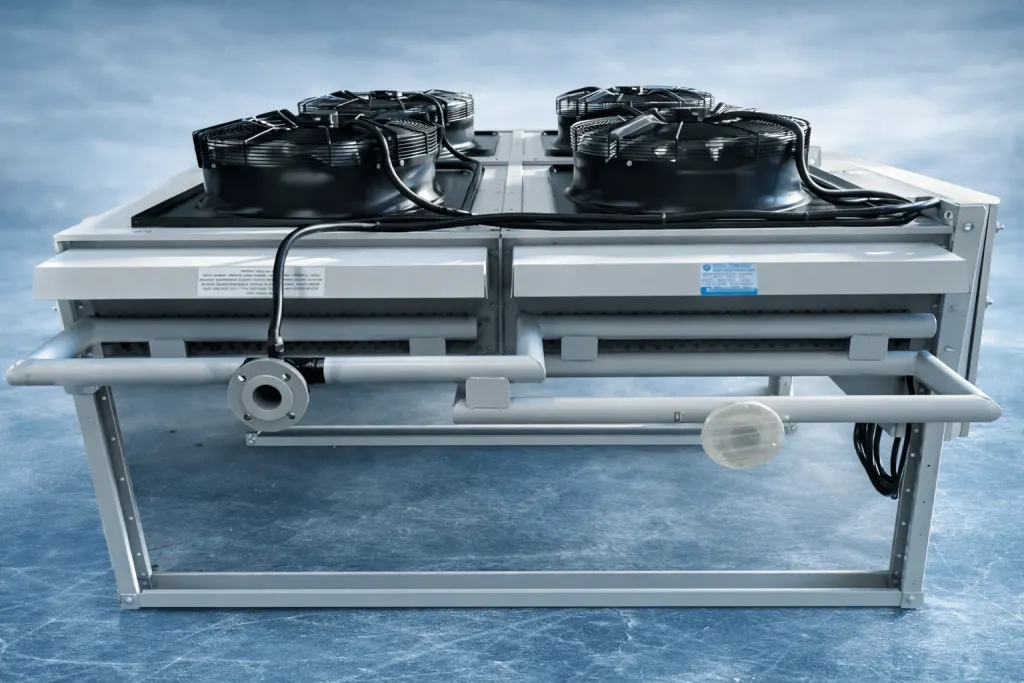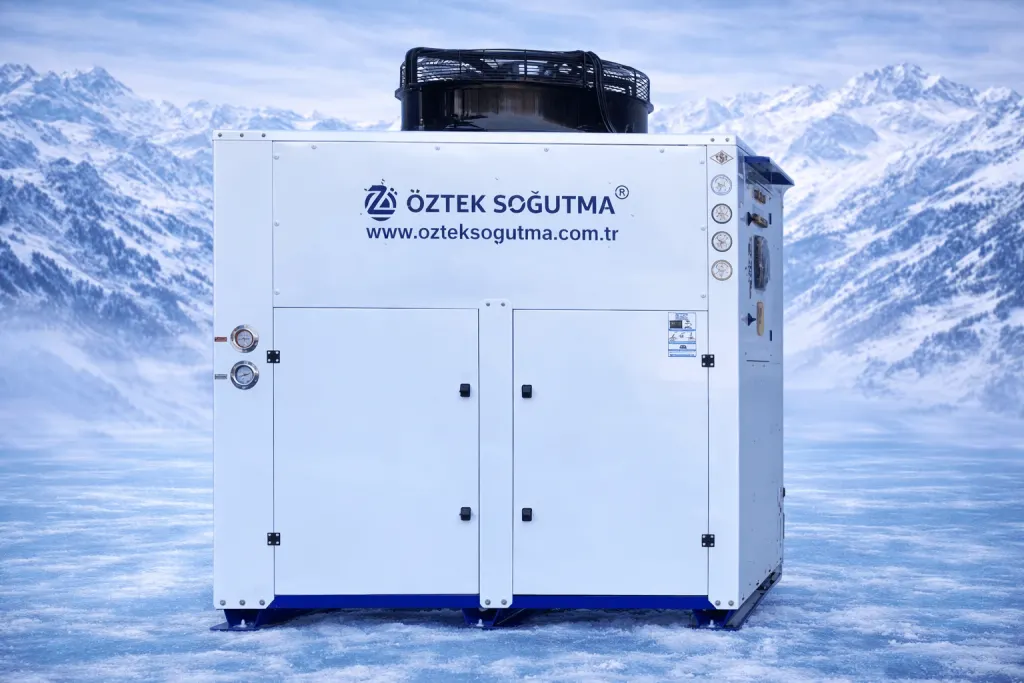
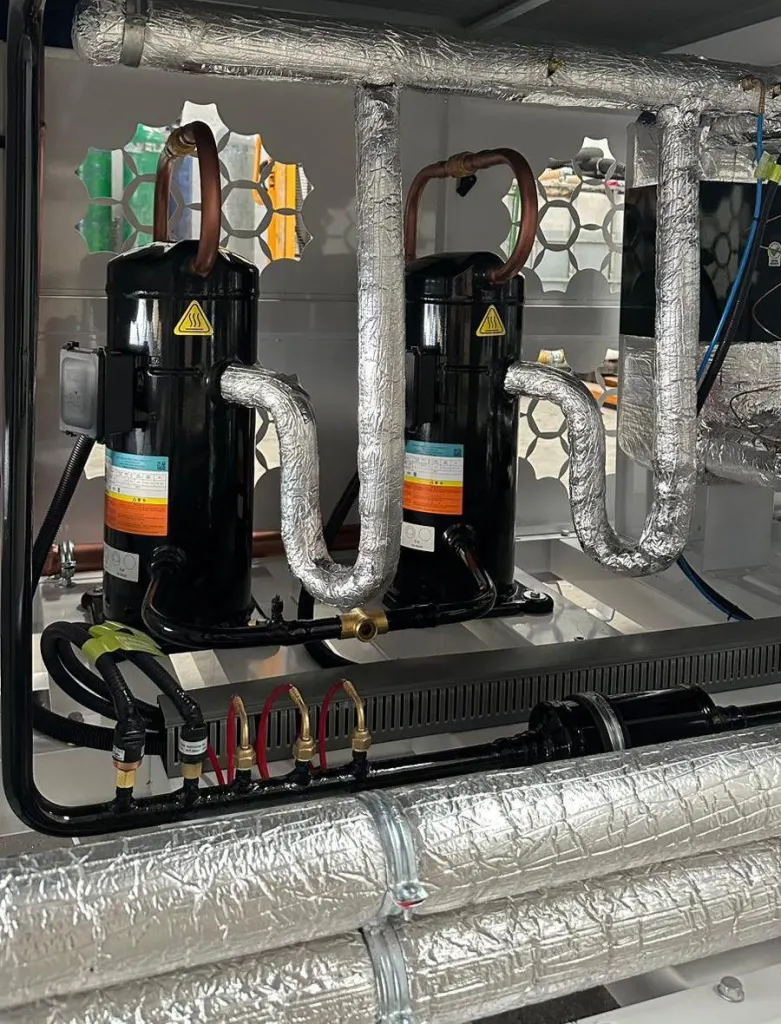
Central chiller 75
70,000–75,000 kcal/h81–87 kW
- Configuration
- 2 circuits, scroll and semi-hermetic compressors
- Use
- Medium-scale lines supplying several machines

70,000–1,000,000 kcal/h81–1,163 kW
Central cooling feeds all machines in the factory from a single cooling centre. With a multi-circuit design and redundant compressors, production does not stop while one circuit is under maintenance.
Our standard production ranges. Intermediate capacities and custom dimensions are built to project. Switch to “Inside view” to see each model's internal layout.
70,000–75,000 kcal/h81–87 kW

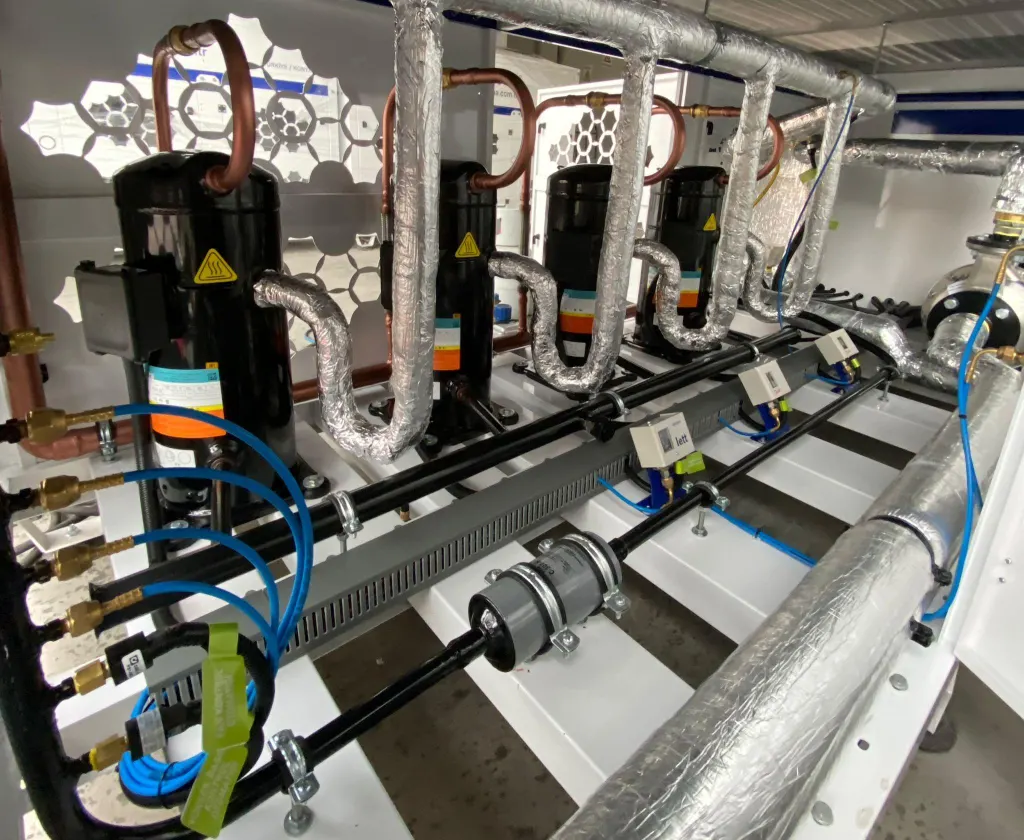
80,000–85,000 kcal/h93–99 kW
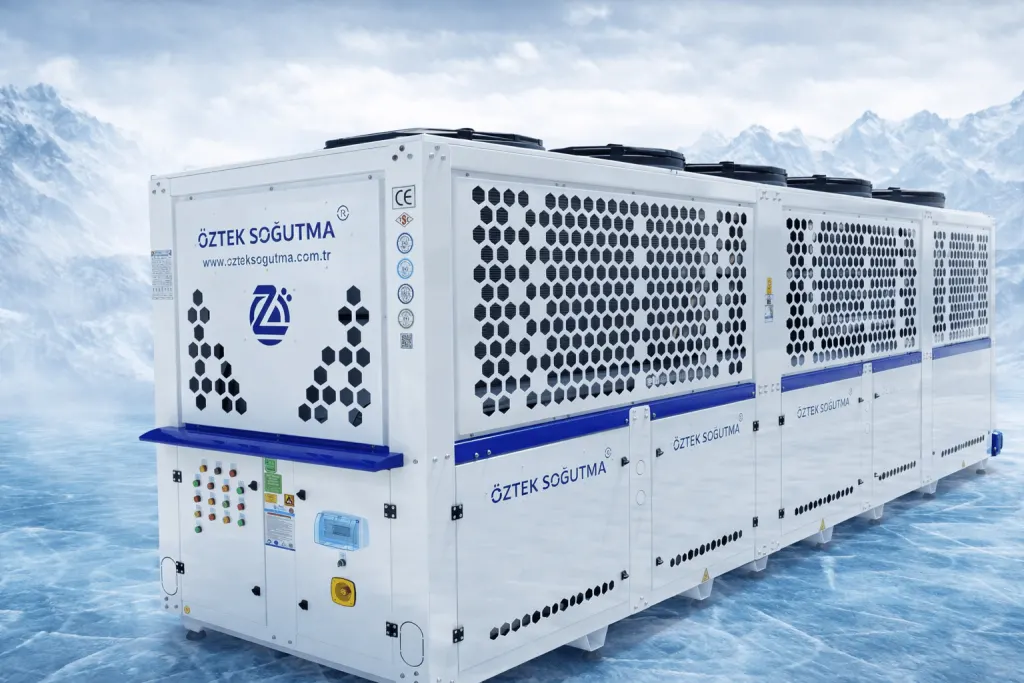

90,000–120,000 kcal/h105–140 kW
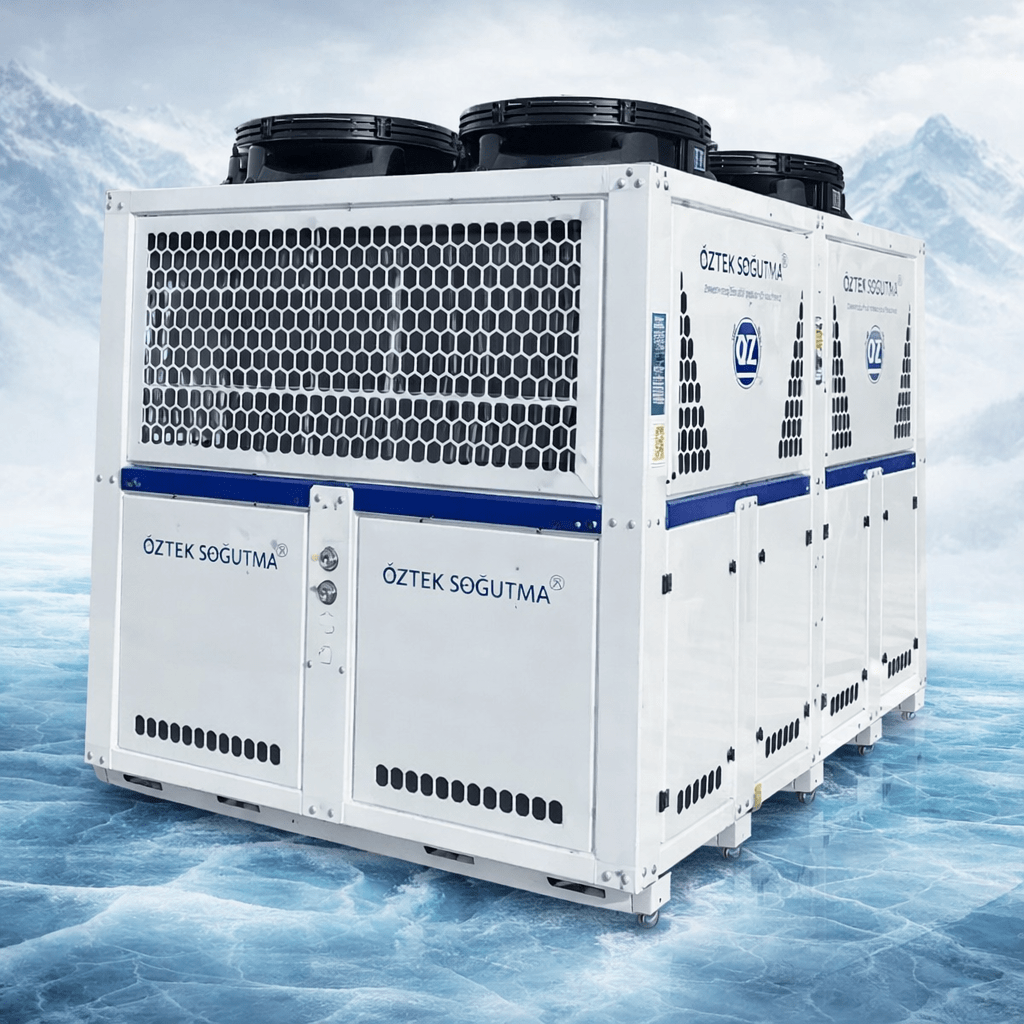
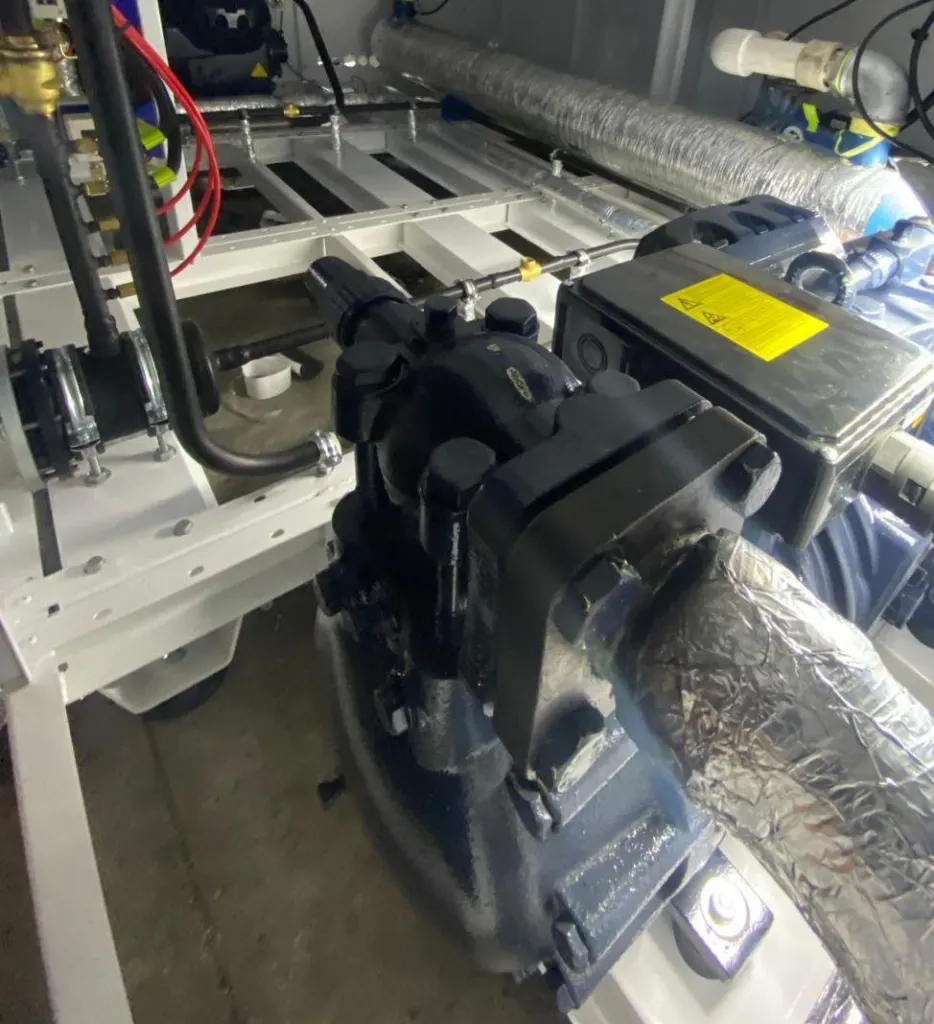
120,000–140,000 kcal/h140–163 kW
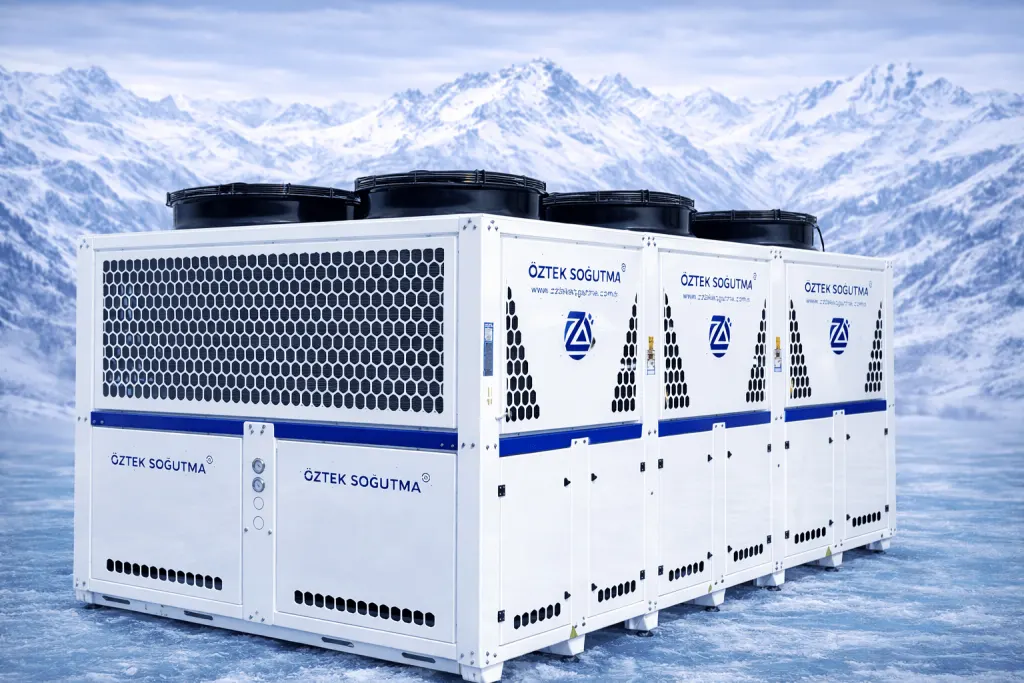
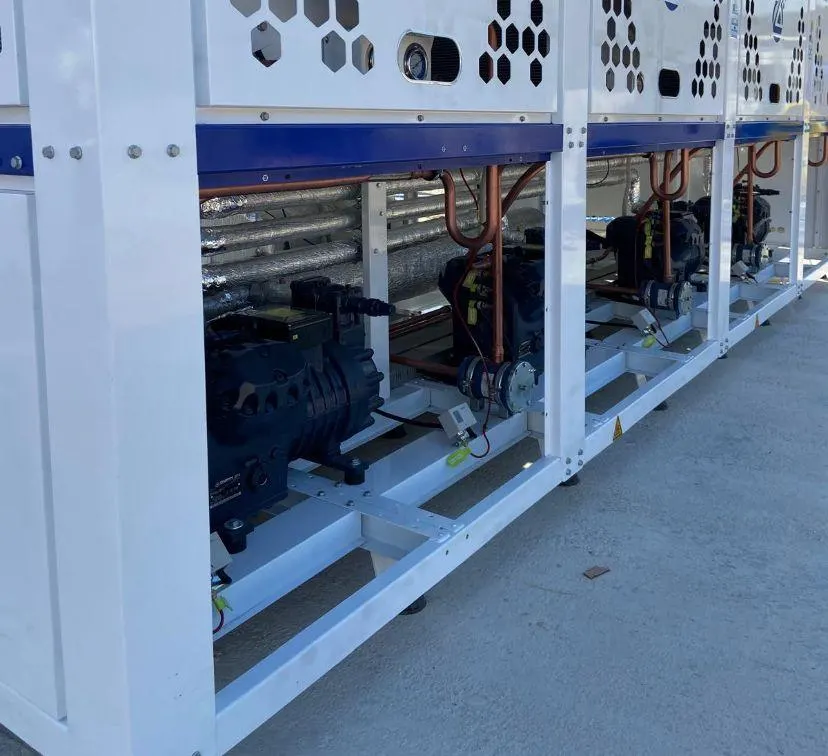
150,000–170,000 kcal/h174–198 kW
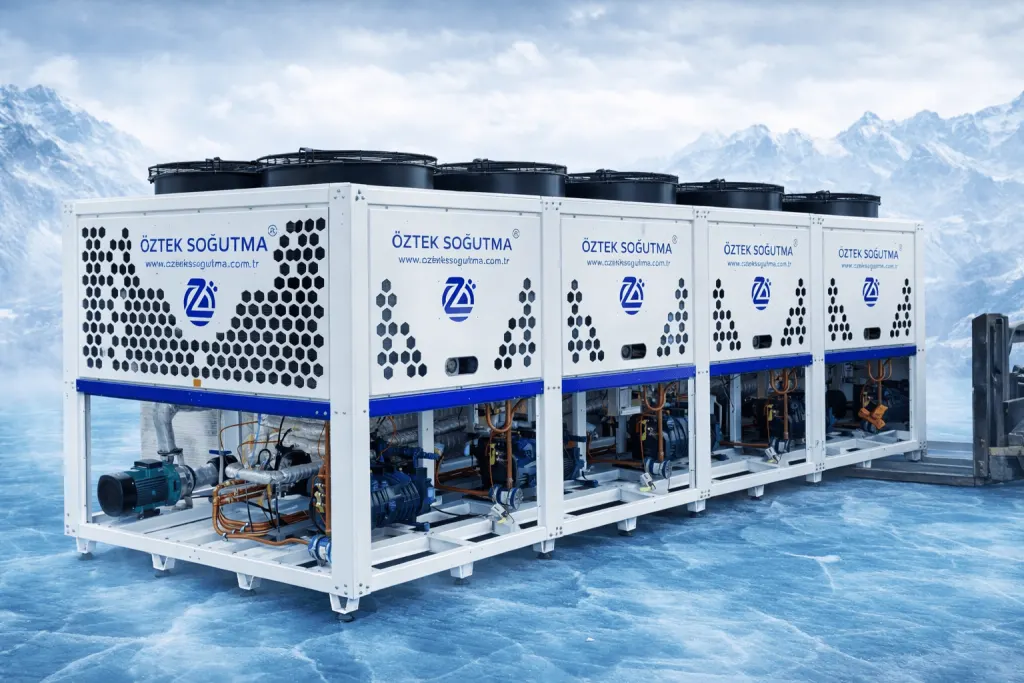

200,000–400,000 kcal/h233–465 kW

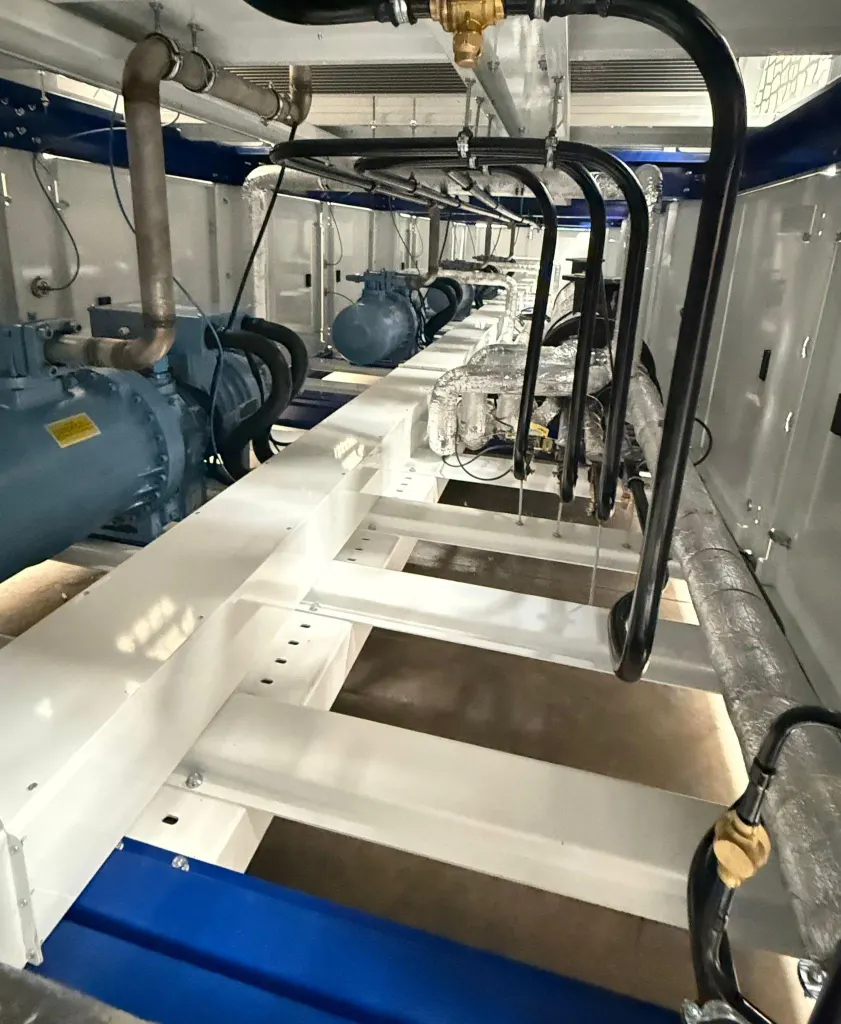
500,000–1,000,000 kcal/h581–1,163 kW
If a plant has many machines, cooling from one central point is tidier and more economical than a separate chiller for each. Heat and noise next to the machines disappear, maintenance is done in one place, and total installed capacity can be lower because machines do not all run at full load at the same time.
The system is built with more than one chiller and pump, so if one unit fails or is in maintenance the others keep cooling (N+1 design). A common controller stages the units according to load and balances their running hours.
Yes. The main circuit runs at the lowest required temperature, and machines needing higher temperatures are fed through a mixing valve or a mould temperature controller. If the difference is very large, separate circuits are planned.
Yes, when designed correctly. Several chillers operating in stages work more efficiently at part load, variable-flow pumps deliver only the water needed, and in cooler months free cooling with a dry cooler can be used without compressors.
Once the total cooling demand exceeds about 58 kW (50,000 kcal/h), a single central system usually beats separate chillers per machine in both investment and operating cost.
There are two independent refrigeration circuits with two compressors each. If one circuit is taken down for maintenance or fails, the other continues automatically and production does not stop.
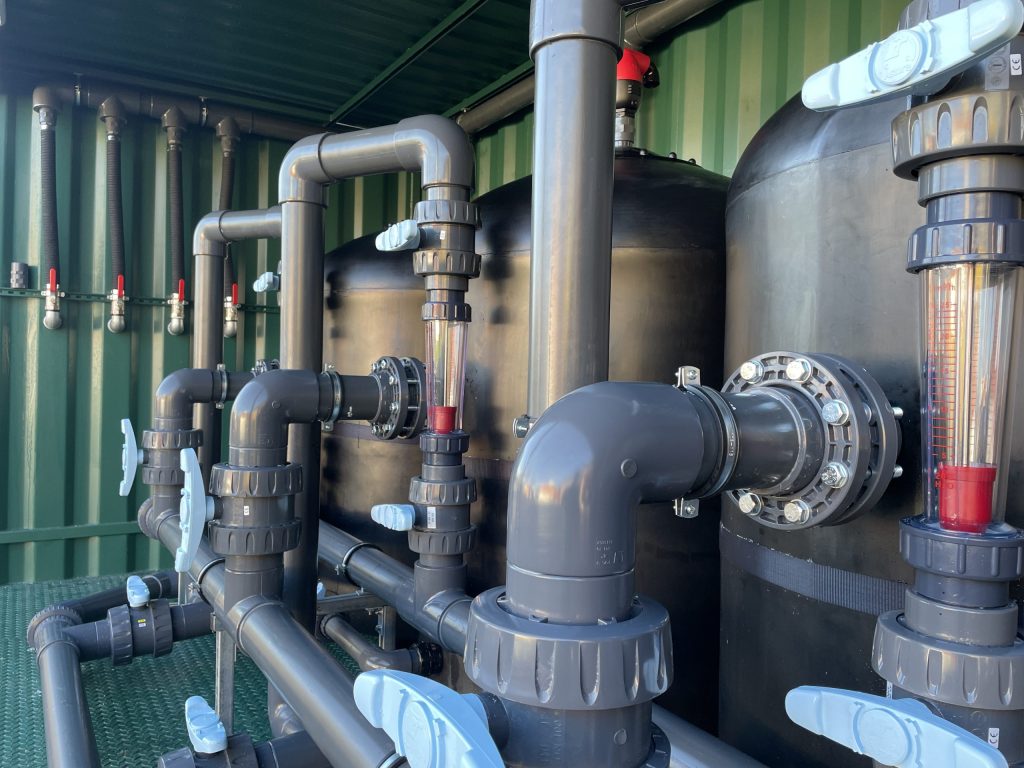
The machines' diversity factor, hydronic balance, pipe sizes and buffer tank volume are calculated together. Correct sizing also ensures efficient operation at part load.
Send us your machine data or a photo of your plant; our engineers will calculate the heat load and prepare your written quotation within 24 hours.