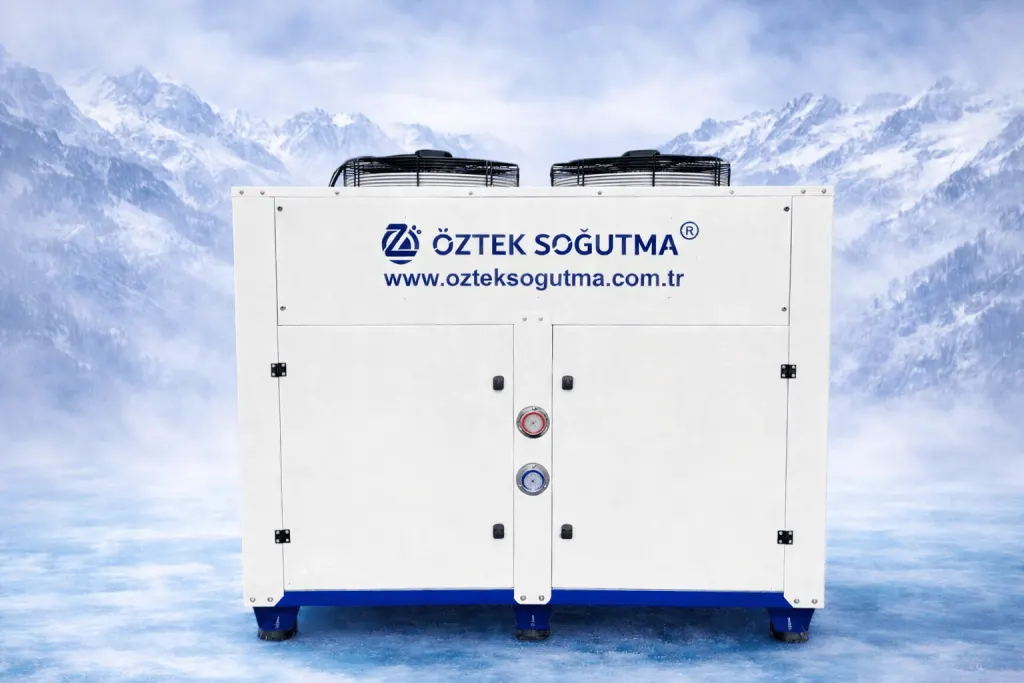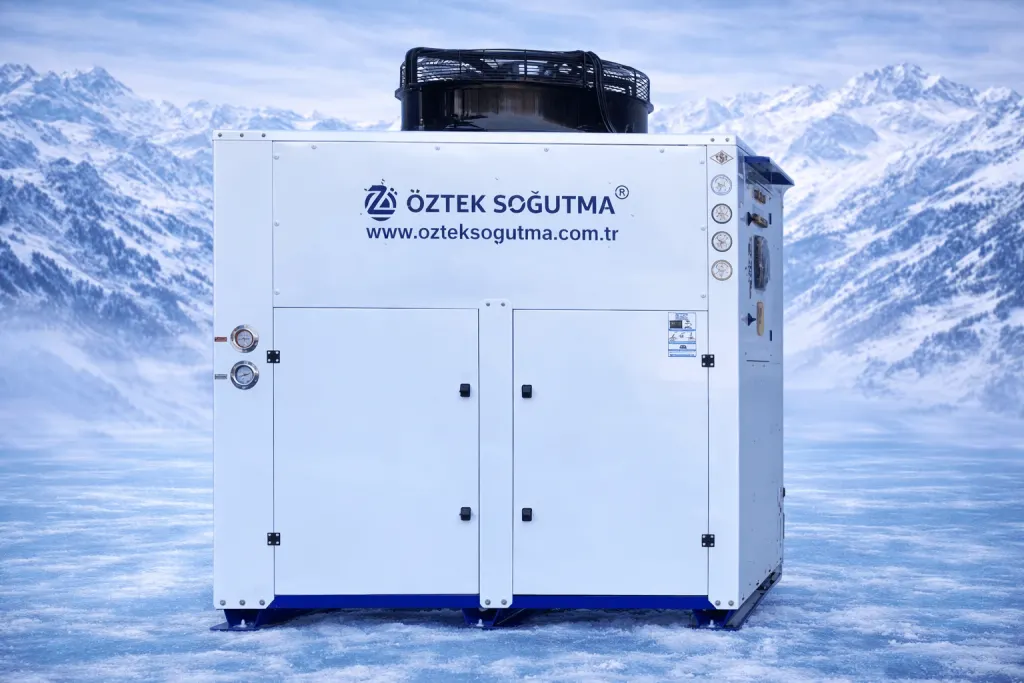
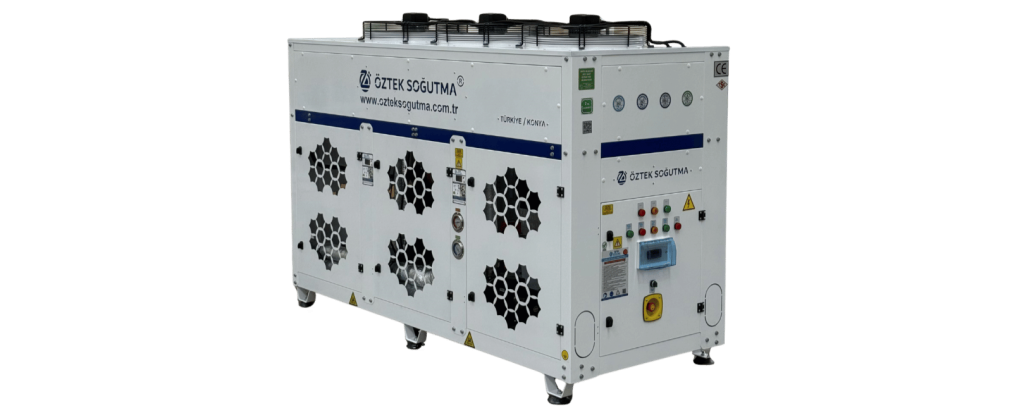
Closed-loop chiller
Capacity to projectNo water loss
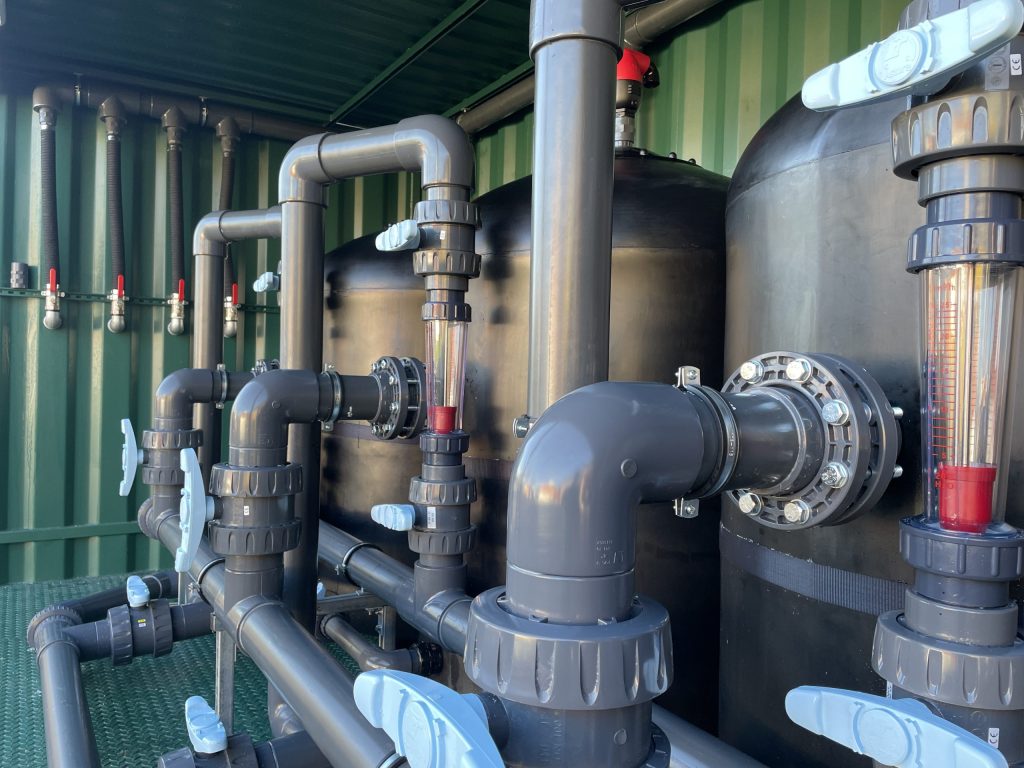
Systems that cool process water in a closed loop without contact with outside air. With no evaporation loss or outside contamination, the risk of scaling and clogging in heat exchangers and mould channels is reduced.
- Circuit
- Closed, not open to atmosphere
- Water loss
- No evaporation
- Contamination
- Isolated from the environment
- Selection
- Based on heat load calculation
Applications
- Plastic injection moulds
- Processes requiring precise temperature
- Scale-sensitive equipment
Frequently asked questions
What is a closed-loop chiller?
A closed-loop chiller is a system in which the cooling water circulates in a closed circuit of pipes and a tank without contact with the air. Because the water keeps circulating in the same circuit, it does not get dirty or evaporate, and scale build-up in mould and machine channels is minimised.
What is the advantage of a closed-loop system over an open loop?
In an open tower circuit the water keeps evaporating and picks up dust and scale; channels clog, efficiency falls and make-up water is needed. In a closed loop the water stays clean, there is no water consumption, mould and heat exchanger life is longer and maintenance needs fall.
In which sectors are closed-loop chillers used?
They are used in every process where water must stay clean and at a constant temperature, such as plastic injection and extrusion, CNC and metalworking, laser and welding, hydraulic presses, food and beverage production, and chemical and laboratory applications.
How often is the water changed in a closed loop?
It depends on water quality and conditions, but the circuit water is usually checked once a year and renewed if necessary. Softened or treated water is used where possible, suitable glycol is added if there is a frost risk, and filters are cleaned periodically.
What is the difference between a closed and an open loop?
In an open loop the water is exposed to air, evaporates and becomes contaminated, requiring regular make-up and treatment. In a closed loop the water stays inside the system and its quality is preserved.