Cooling systems for foundries
Induction furnaces need continuous cooling of the coil and power supply; die casting needs cooling of dies and hydraulics. Because an interruption can permanently damage the coil and electronics, closed-loop and redundant designs are essential.

Applications
Machines and processes in this industry for which we have installed cooling systems.
- Heat treatment furnaces
- Vacuum hardening furnaces
- Induction melting furnaces
- Cold-chamber die casting machines
- Hot-chamber die casting machines
What does cooling solve?
The needs we encounter most often in plants in this industry.
- Clean, closed-loop water for induction coils and generators
- Die casting mould and hydraulic oil cooling
- Vacuum furnace body and pump cooling
Cooling in foundries
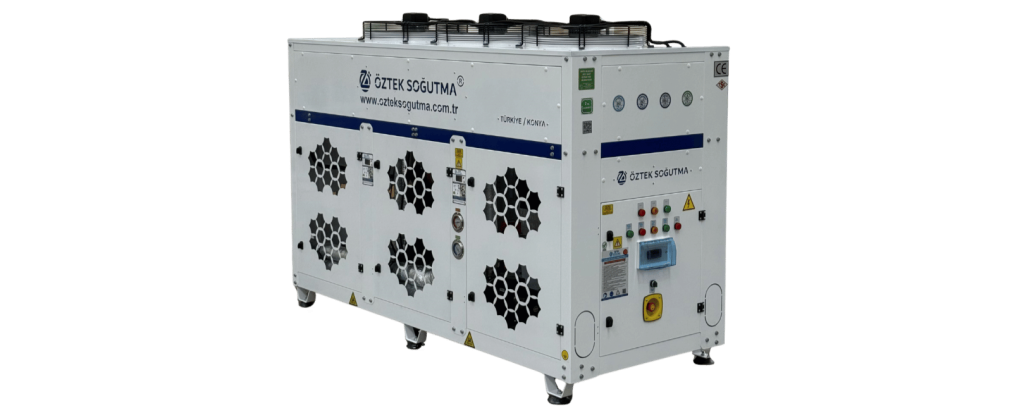
Induction furnaces, die casting machines, moulds, hydraulic units and heat treatment tanks are the main cooling points in foundries. If induction coil cooling stops, the furnace trips within minutes, so uninterrupted, redundant cooling is essential.
Closed circuit and water quality
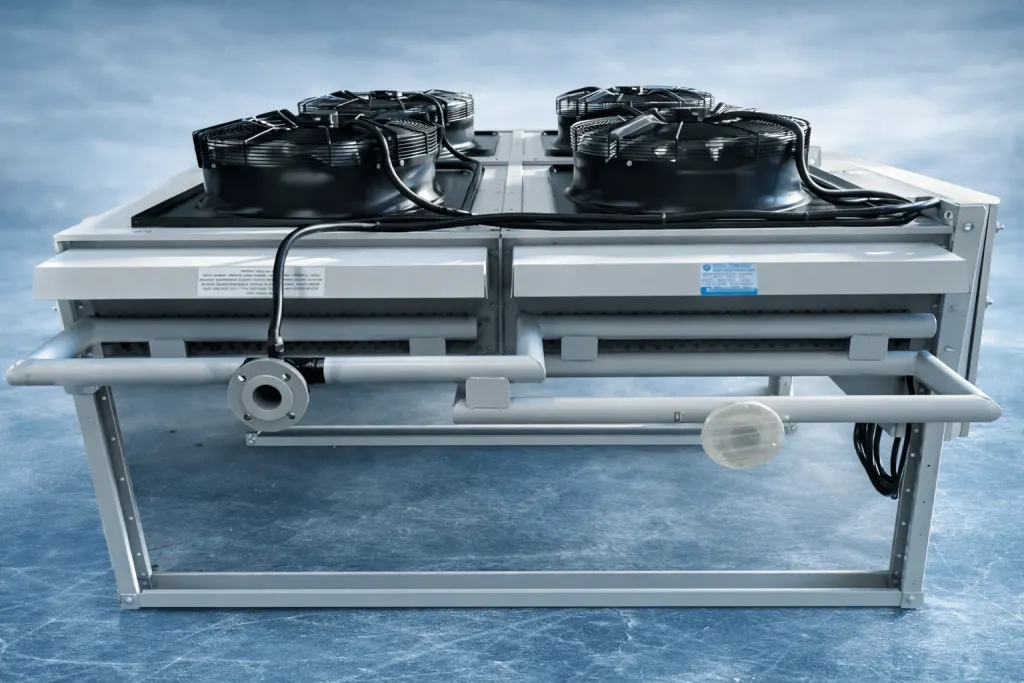
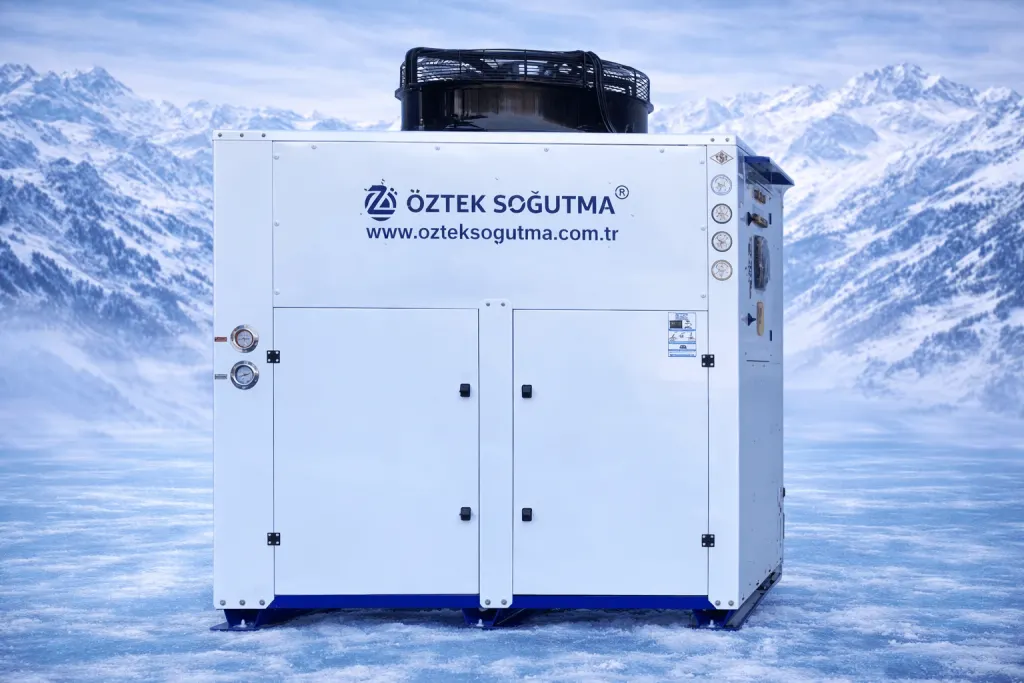
Induction coils and mould channels need clean water; scale causes overheating and failure in the coil. Using a closed circuit, treated water and a chiller together with a dry cooler provides cooling that is both safe and economical.
Technical guides for this sector
Frequently asked questions
Is a tower enough for an induction furnace?
Open tower water gets dirty and forms scale, which is risky for coils. An exchanger fed by a closed-circuit dry cooler or chiller is safer.
At what temperature is a die casting mould kept?
It depends on the alloy and part; a mould temperature controller keeps the mould at the required value, while the chiller removes heat from these units and the hydraulic system.
Recommended products
Final selection is made after the heat load calculation.