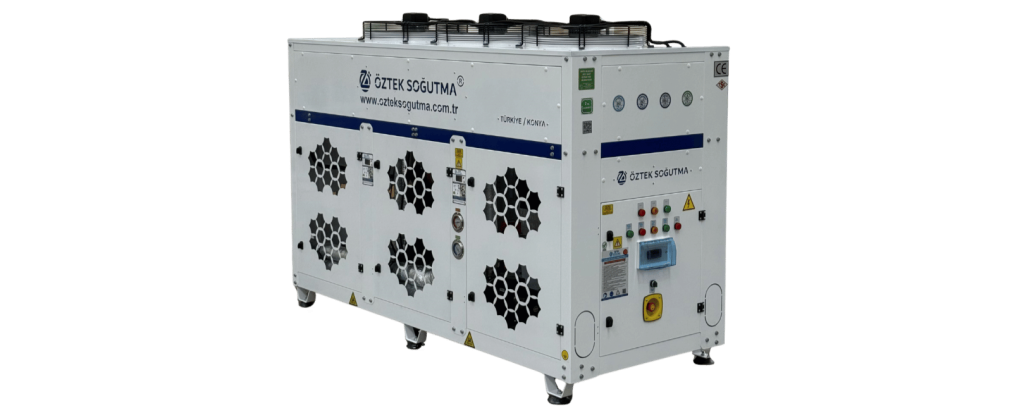
Cooling systems for the rubber industry
Heat generated during rubber mixing and vulcanization causes scorch and degrades product quality. Controlled cooling on Banbury, extruder and press lines preserves the processability of the compound.
Applications
Machines and processes in this industry for which we have installed cooling systems.
- Rubber presses
- Sole injection machines
- Banbury mixers
- Profile and gasket extruders
What does cooling solve?
The needs we encounter most often in plants in this industry.
- Banbury rotor and body cooling
- Extruder screw and head temperature control
- Press hydraulic oil cooling
Cooling in rubber production
Banbury and internal mixers, calender and extruder rolls, vulcanising presses and hydraulic systems generate intense heat. If compound temperature is not controlled, premature curing (scorch) occurs and a batch may be scrapped.
Roll and mould cooling
Keeping roll surface temperature even preserves thickness tolerance. In press moulds, heating and cooling cycles are programmed; a chiller shortens the cooling step.
Frequently asked questions
What water temperature does a Banbury mixer need?
It depends on the compound and recipe; the aim is to keep compound temperature constant. The exact value is set by the production recipe.
How is a rubber roll cooled?
Water at a constant temperature circulates inside the roll; because the chiller keeps the water in a closed circuit, no scale forms in the channels and surface temperature stays even.
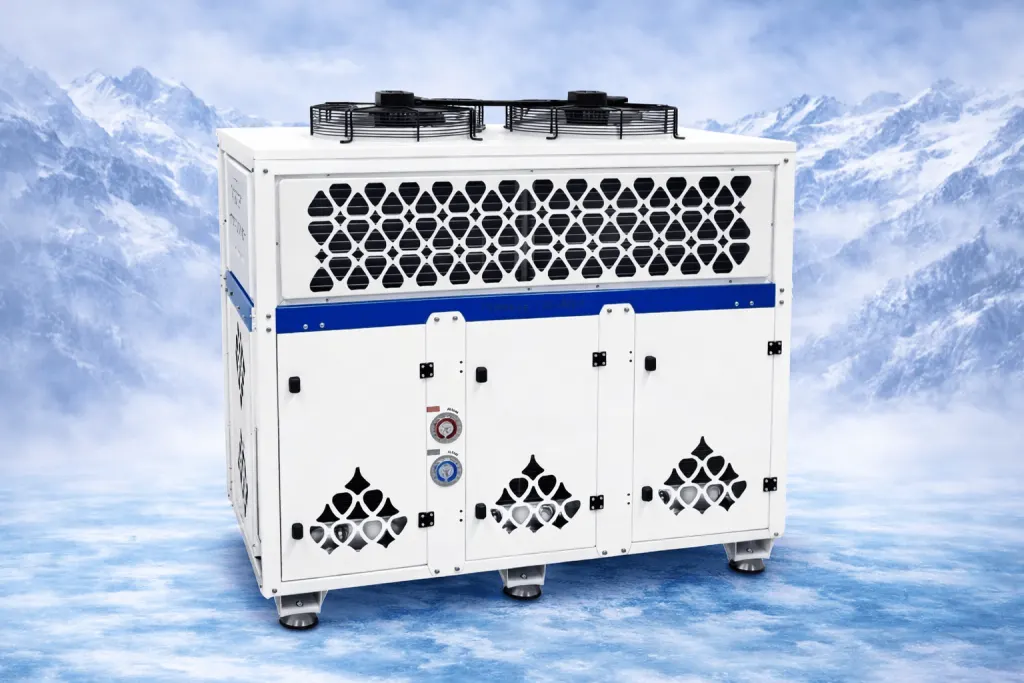
Recommended products
Final selection is made after the heat load calculation.