
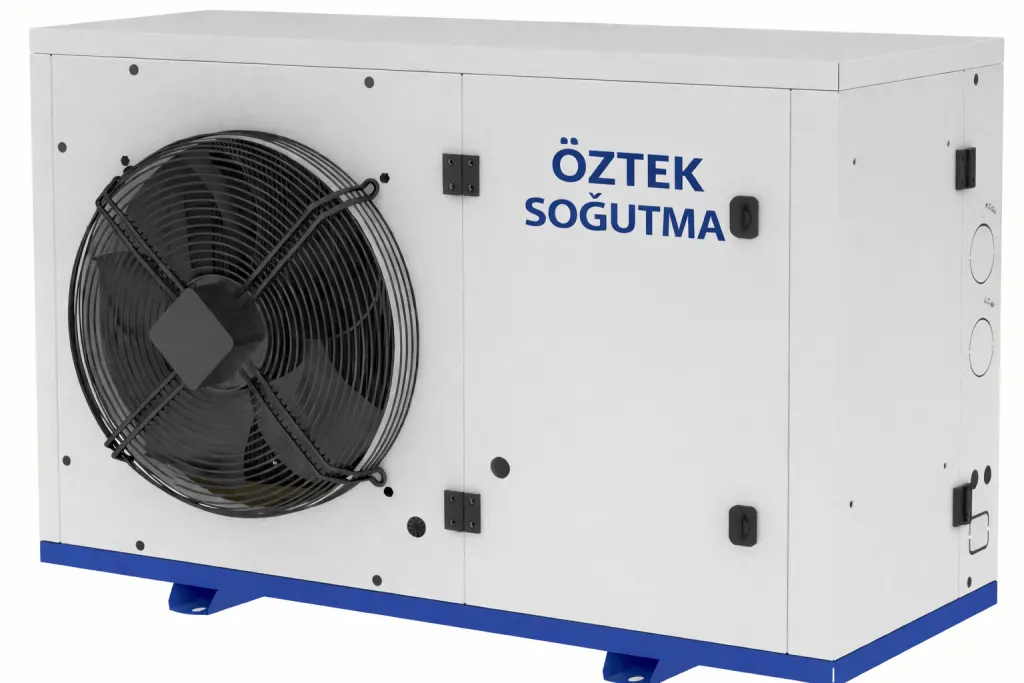
A virtual pipeline delivers natural gas, compressed into tube trailers, to factories, hotels, greenhouses or settlements that the gas pipeline does not reach. Gas is compressed to high pressure at the mother station and filled into trailers; at the point of use it is supplied through a pressure reduction station. The compression and filling side of this chain needs reliable cooling with a chiller and a dry cooler.
Where is cooling needed at the mother station?
- Compressor intercoolers and aftercoolers: In multi-stage CNG compressors the gas is cooled after every stage.
- Compressor body and oil circuit: In continuous, high-flow operation the jacket water temperature must be kept stable.
- Trailer filling gas: Hot gas means less mass at the same pressure. Cooling the filling gas lets trailers leave fuller, especially in summer.
Why does capacity drop in summer?
Mother stations usually run day and night. In summer, in compressors cooled by towers or air radiators, gas outlet temperature rises, the compressor goes into protection and the amount of gas carried per trailer falls. Feeding the gas cooler from a chiller largely prevents this loss. We explain the details in our gas cooling at CNG stations article.
Dry cooler and chiller together
Loads such as the compressor jacket and oil cooler can be cooled by a closed-circuit dry cooler without water consumption. The aftercooler and filling gas need low temperature even in summer, so they are fed by a chiller. Separating these two circuits reduces chiller capacity and energy consumption.
At the point of use
At the pressure reduction station the gas cools as it expands; heating, not cooling, is usually needed there. Our work is the cooling on the compression and filling side of the chain.
Frequently asked questions
How is cooling capacity calculated for a virtual pipeline mother station?
The number and power of compressors, gas flow, number of stages, target filling temperature and summer temperatures in the region are assessed together.
Can a chiller be added later to an existing station?
Yes. The water side of the existing gas cooler can be connected to a chiller circuit after checking exchanger capacity and water flow.
Is cooling needed in an LNG virtual pipeline?
In LNG transport the gas is already liquid and very cold; the cooling demand in these plants is mainly at the boil-off gas (BOG) compressors. For details see our compressor cooling at LNG plants article.
For other applications in the energy and gas sector, see our energy and gas sector cooling page.
Let us assess your plant together. Send your compressor and gas data by WhatsApp or e-mail; our engineers will calculate the cooling demand and propose a suitable system in writing.