
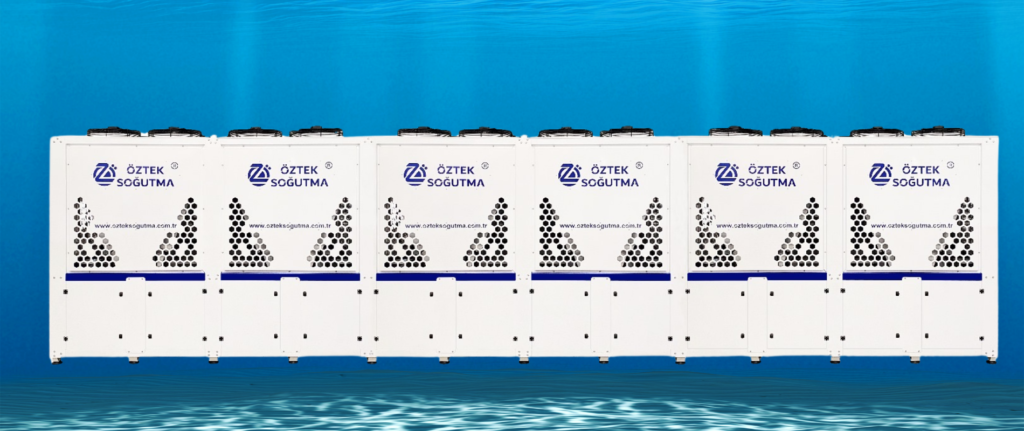
Gas cooling at a CNG station is the answer to the summer complaint that vehicles "do not fill up completely". Compressed gas heats up, and hot gas carries less mass at the same pressure. When the tank reaches its pressure limit the vehicle is in fact under-filled. Cooling the gas before storage and dispensing allows more gas to be delivered at the same pressure.
How temperature affects filling
Gas density falls as temperature rises, and the gas in the tank also heats during fast filling. Because filling stops at the pressure limit, less gas enters the tank with hot gas; as it cools, tank pressure drops and the customer notices the short fill.
Where is the gas cooled?
The aftercooler at the compressor outlet cools the gas before storage. When the aftercooler is a chiller-fed heat exchanger, the gas can be brought to a lower temperature independent of ambient conditions. The application and temperature target are defined together with the compressor and station manufacturer's data.
Benefits of chiller cooling
- More consistent fills on hot days
- Compressor runs at lower temperature
- Ambient-independent cooling in intercoolers and aftercoolers
Hazardous areas (ATEX) and layout
In gas facilities, explosive atmosphere zones are defined by the site risk assessment. The location of the cooling unit, its electrical equipment and piping must follow this classification. In most projects the chiller is placed outside the hazardous zone and reaches the compressors and heat exchangers through a cooling water or glycol line. The final layout is set by the site ATEX documentation and the approval of the responsible engineer.
What happens during filling?
When gas is pushed quickly into a vehicle tank, it heats up as it is compressed. Because hot gas has a lower density, the tank reaches its safety pressure with less gas and the vehicle is not fully filled. The driver returns sooner, and the station serves fewer vehicles in the same time. Cooling the gas entering the storage tanks reduces this loss.
Points cooled at the station
- Compressor intercoolers and aftercoolers
- Compressor oil circuit
- Gas aftercooler before storage
- In some designs, gas pre-cooling before filling
Choosing the right system
The choice depends on the station's daily number of fills, compressor capacity and local summer temperature. The cooling unit is placed outside the hazardous area boundary and connected to the gas coolers by a water circuit. Stations that must run without interruption get redundant pumps and compressors.
To see all cooling applications in the energy and gas sector in one place, visit our energy and gas sector cooling page.
Frequently asked questions
Does gas cooling shorten filling time?
Colder gas allows more gas at the same pressure, so fill efficiency improves; the result depends on station design.
Is cooling needed in winter?
The cooling demand falls; frost protection and control settings must be adjusted for winter.
Does gas cooling increase station capacity?
Because vehicles fill more fully and faster, the number of vehicles served in the same time can rise. The gain depends on the station's current cooling and the climate.
Can cooling be added to an existing station?
Yes. After reviewing the compressor coolers and gas lines, a chiller and water circuit can be added to the existing installation.
Send us your compressor data and target temperatures; our engineers will calculate the cooling requirement with you.