
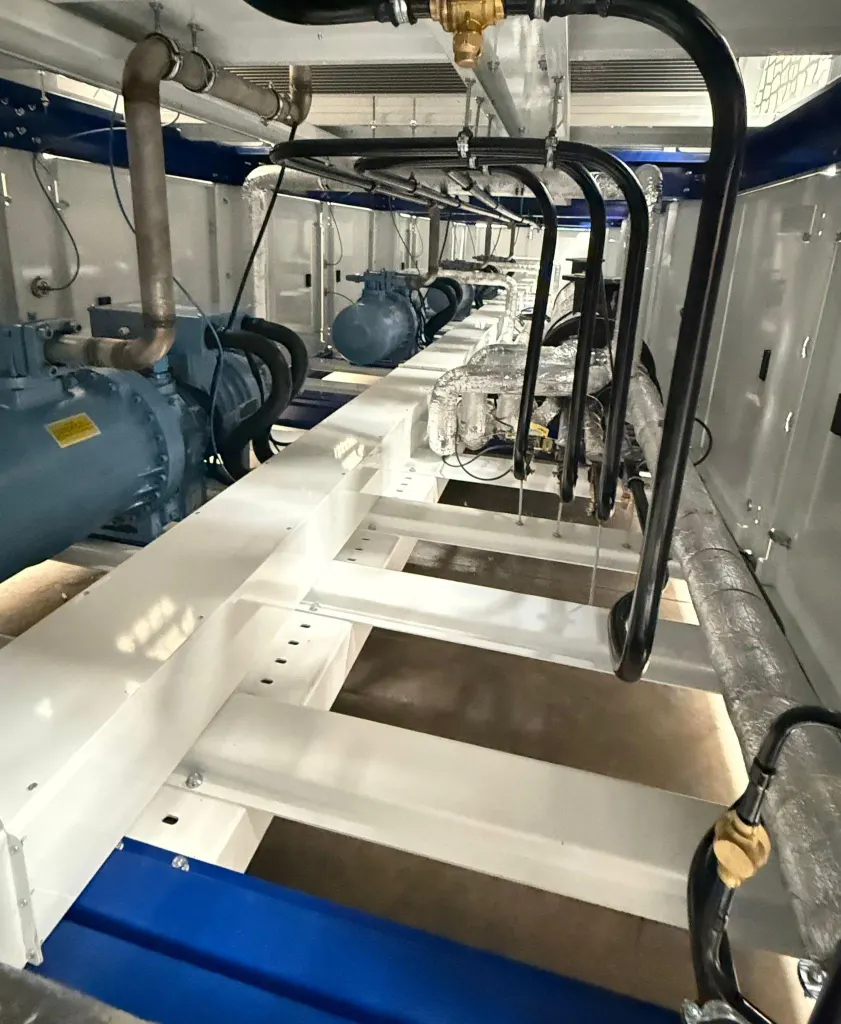
Chiller tank volume directly affects system stability and compressor life. Without enough water in the circuit, even small load changes swing the water temperature and the compressor starts and stops frequently.
Why is a tank needed?
Compressors should run and stop for a minimum time each cycle. With a small water volume the setpoint is reached very quickly, the compressor stops and soon restarts; these short cycles damage it and raise energy use. The tank adds thermal inertia.
How is volume determined?
It depends on chiller capacity, number of compressors and stages, control accuracy and process load changes. Manufacturers usually give a minimum water volume per unit of capacity; piping and machine water count too. Processes with sudden load increases benefit from a larger tank.
Single or split tank?
A single tank is enough for simple systems. Where the process needs variable flow, a hot/cold split tank lets chiller and process pumps run independently.
Insulation and material
An uninsulated cold tank wastes energy and sweats. Stainless or corrosion-resistant material protects water quality; fit a level gauge and drain valve.
Frequently asked questions
Is a large tank harmful?
Initial pull-down takes longer, but stability improves; balance space and cost.
Does every chiller need a tank?
Not if the circuit water volume already exceeds the maker's minimum.
Tell us about your project. Send your product, quantities and location via WhatsApp or e-mail; our engineers will calculate the load and recommend the right system in writing.