
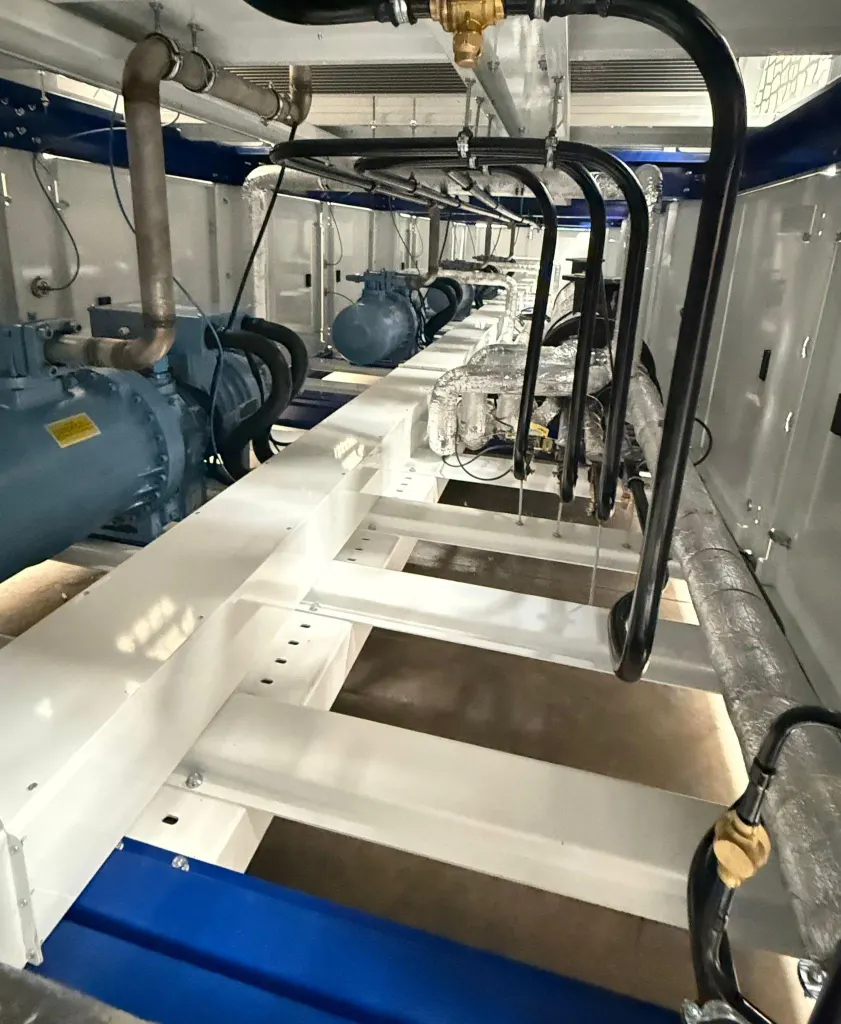
Freeze protection is the key winter maintenance topic for outdoor air-cooled chillers and piping through open areas. Water that freezes in the evaporator can crack plates or tubes, meaning costly repair and long downtime.
How does freezing happen?
When the system is off and outside air drops below zero, water in pipes and evaporator can freeze; when running, low flow or a low setpoint can ice the evaporator.
Using glycol
The safest method is adding the right glycol ratio for the lowest local temperature. Glycol lowers heat-carrying capacity and raises pump load, so recheck capacity for the mixture and measure the ratio each season.
Electrical measures
- Freeze thermostat: stops the compressor when leaving water gets dangerously cold.
- Flow switch: prevents compressor running without flow.
- Heater cable and evaporator heater: prevent freezing when idle; power must stay on.
- Pump circulation: keeps water moving in cold weather on some systems.
If it will be off for a long time
For systems without glycol that will be idle all winter, fully draining the water is the surest solution; make sure no water remains in the exchanger.
Frequently asked questions
How is glycol ratio measured?
With a refractometer; too low risks freezing, too high reduces efficiency.
What if power fails?
Heaters and pumps stop; systems without glycol are at risk, so glycol is the most reliable measure in critical areas.
Tell us about your project. Send your product, quantities and location via WhatsApp or e-mail; our engineers will calculate the load and recommend the right system in writing.