
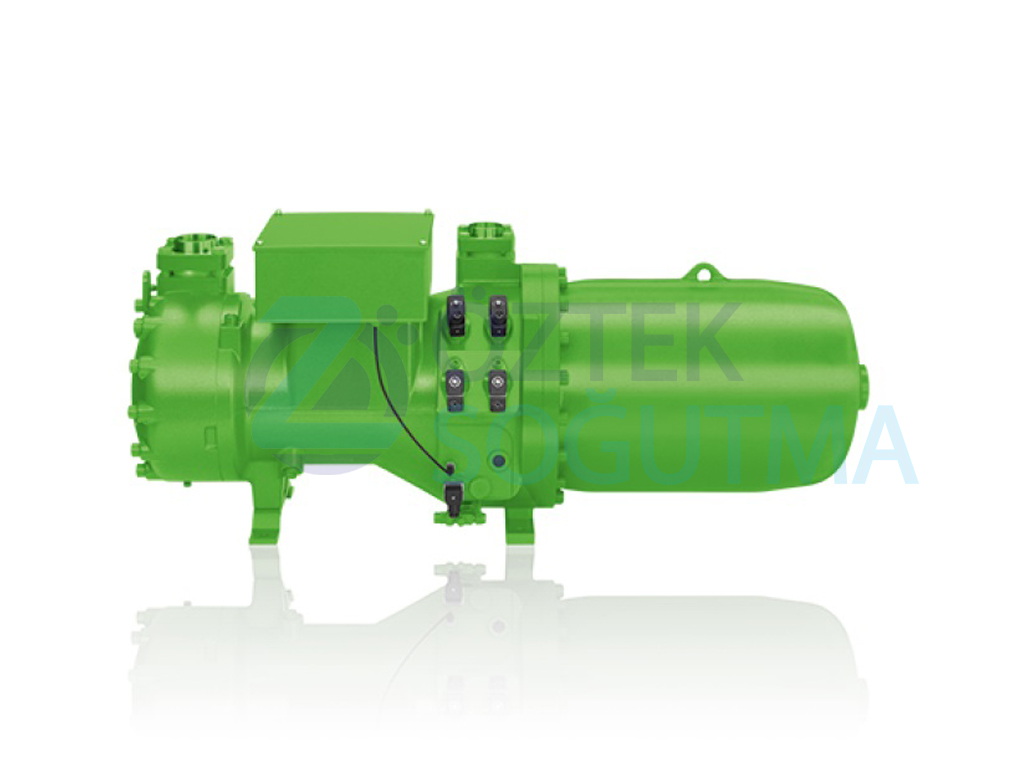
Upgrading biogas to biomethane and then injecting it into the grid or compressing it as bio-CNG requires controlled cooling at several points. A chiller and a dry cooler are used together to remove moisture from the gas, cool the compressors and protect the efficiency of the upgrading process.
Where is cooling needed in a biomethane plant?
- Gas drying: Biogas from the digester is saturated with water vapour. The gas passes through a chiller-cooled heat exchanger so that the moisture condenses and is separated.
- Pre-compression compressor: Gas heats up as it is compressed for the membrane or PSA system; intercoolers and aftercoolers need cooling water.
- Water scrubbing: Keeping the scrubbing water cold increases CO₂ solubility and therefore upgrading efficiency.
- Bio-CNG compressor: When biomethane is compressed to high pressure the gas is cooled after every stage.
Which system goes where?
A chiller is used where water below ambient temperature is needed, such as gas drying and scrubbing water. For loads that can run on warmer water, such as compressor jackets, oil coolers and aftercoolers, a closed-circuit dry cooler reduces water and chemical consumption. Planning both circuits together in one plant lowers energy consumption.
Information needed for the project
- Raw biogas flow and composition (methane, CO₂, moisture)
- Upgrading method: membrane, water scrubbing, PSA or amine
- Number of compressors, stages and heat rejection values
- Target dew point for gas drying
- Summer and winter temperatures at the site
Winter conditions
Biogas plants are usually outdoors. Glycol in a suitable ratio is used in dry cooler and outdoor unit circuits against freezing; in the gas drying exchanger the set point is chosen carefully so that condensed water does not freeze.
Frequently asked questions
Is a chiller required for biogas drying?
Yes, if the target dew point is below ambient temperature. In most plants the gas is cooled to a few degrees to remove moisture; this temperature cannot be reached with a cooling tower or dry cooler.
Is a dry cooler enough for a biomethane compressor?
If the water temperature allowed by the compressor manufacturer stays above summer ambient temperature, a dry cooler is enough. If lower water temperature is required, a chiller or adiabatic support is added.
How is cooling planned when a biomethane unit is added to an existing biogas plant?
The existing engine or boiler cooling circuit is reviewed; the new upgrading and compressor loads are calculated and additional capacity is planned.
For similar compression applications, see our CNG compressor cooling article.
For other applications in the energy and gas sector, see our energy and gas sector cooling page.
Let us assess your plant together. Send your compressor and gas data by WhatsApp or e-mail; our engineers will calculate the cooling demand and propose a suitable system in writing.